


Acne with Concurrent Photoaging: Treating the 'Adult Acne + Pigment + Texture' Patient
Explore effective treatments for adult acne with concurrent photoaging in skin of color. Evidence-based strategies included.

Acne and photoaging frequently coincide in individuals with darker skin, creating a complex scenario that requires targeted treatments. Addressing adult acne patients with concurrent photoaging means tackling inflammation to prevent post-inflammatory hyperpigmentation (PIH) while simultaneously improving pigmentation and skin texture.
Understanding Acne and Photoaging in Skin of Color
Individuals with Fitzpatrick skin types IV–VI have more reactive melanocytes, making them prone to pronounced and persistent PIH, especially after acne inflammation. Photoaging in these skin types often manifests as uneven tone and hyperpigmentation rather than wrinkling typically seen in lighter skin. Managing these patients requires a nuanced approach that minimizes irritation and inflammation.
The Pathophysiology of Acne in Skin of Color
Acne in darker skin tones involves increased sebum production and keratinocyte retention, which contribute to clogged follicles. The inflammatory response can be more intense, increasing the risk of PIH. Understanding these pathways helps in directing appropriate treatment options. Details: Sebocytes in these individuals are often hyperactive, leading to an excess of sebum and creating an ideal environment for Cutibacterium acnes proliferation, aggravating inflammatory processes.
Photoaging: Beyond Wrinkles
In darker skin, photoaging can lead to texture changes, dullness, and uneven skin tone due to the impact of UV on melanocyte activity. This necessitates interventions targeting melanin production and distribution. Discussion: Melanocytes become hyperactive with chronic UV exposure, increasing melanin dispersion and leading to patchy pigmentation. Effective sun protection is critical, reinforcing the need for mineral SPF formulations with additional antioxidants to mitigate these effects.
Effective Treatments for Acne and Photoaging
Addressing both conditions requires an integrated treatment plan that effectively targets acne while managing pigmentation and texture changes. Accurate patient assessment and protocol customization are essential.
Topical Retinoids as First-Line Treatments
Topical retinoids such as tretinoin, adapalene, and tazarotene are effective first-line therapies. These agents help reduce acne lesions, improve PIH, and enhance texture by promoting cell turnover and collagen synthesis. Mechanisms: Retinoids bind to nuclear receptors, influencing gene expression related to keratinocyte proliferation and differentiation. Dosing: Begin with lower concentrations (e.g., 0.025%) applied 2-3 times a week, gradually increasing frequency as tolerated. Formulations like microencapsulated retinoids help reduce irritation. Incorporating peptide-based adjuncts may further enhance collagen synthesis and minimize irritation.
Retinoid management must consider cutaneous hydration; combining with non-comedogenic moisturizers enhances patient adherence. For sensitized skin, enable a gradual buildup technique, particularly in winter months when barrier function is compromised.
Alternative Agents for PIH
Hydroquinone, though effective, is controversial due to potential side effects like exogenous ochronosis in deeper skin tones. Alternatives: Azelaic acid (15-20%) and mequinol target tyrosinase and reduce melanin synthesis, suitable across various skin types. Consider products with controlled-release mechanisms to minimize irritation.
Clinical Tip: Combining azelaic acid with niacinamide can enhance anti-inflammatory effects, while using encapsulated delivery systems minimizes surface irritation. Newer agents like tranexamic acid offer promising results for PIH, working synergistically with established therapies.
Incorporating Chemical Peels and Laser Treatments
Safe Use of Chemical Peels
Superficial chemical peels, such as those using glycolic (20-30%) or salicylic acid, can improve both acne and pigmentation safely. Safety Measures: Utilize buffer agents and neutralizers during application to control depth and avoid over-exfoliation. Technique: Apply after thorough skin prepping; carefully control application time (2-4 minutes) to prevent PIH.
See detailed application in 70% Glycolic Acid Peel.
Protocol Selection: For skin types susceptible to PIH, consider a low-irritation option such as the Gentle Melasma protocol (565): keeping inflammation low is what keeps PIH risk low.
Role of Laser Treatments
Nonablative fractional laser resurfacing offers benefits in acne scarring with minimal adverse effects. Selection: Opt for devices with controllable energy settings suitable for type IV–VI skin. Procedure: Treatment involves multiple sessions (3-6) spaced 4-6 weeks apart. Use cooling mechanisms during application to reduce thermal damage risk. Combining pre- and post-laser treatments with topical antioxidants can further enhance outcomes and reduce downtime.
Laser treatments demand comprehensive pre-assessment to align patient expectations with achievable results. Emphasizing a conservative approach during initial treatment sessions aids in outcome refinement and minimizes risk.
Practical Protocol Recommendations
- Sun Protection: Implement broad-spectrum sunscreens (SPF 30+) to prevent further pigmentation and aging.
- Topical Therapy: Start with a topical retinoid, adjust based on patient tolerance, and consider newer formulations to reduce irritation.
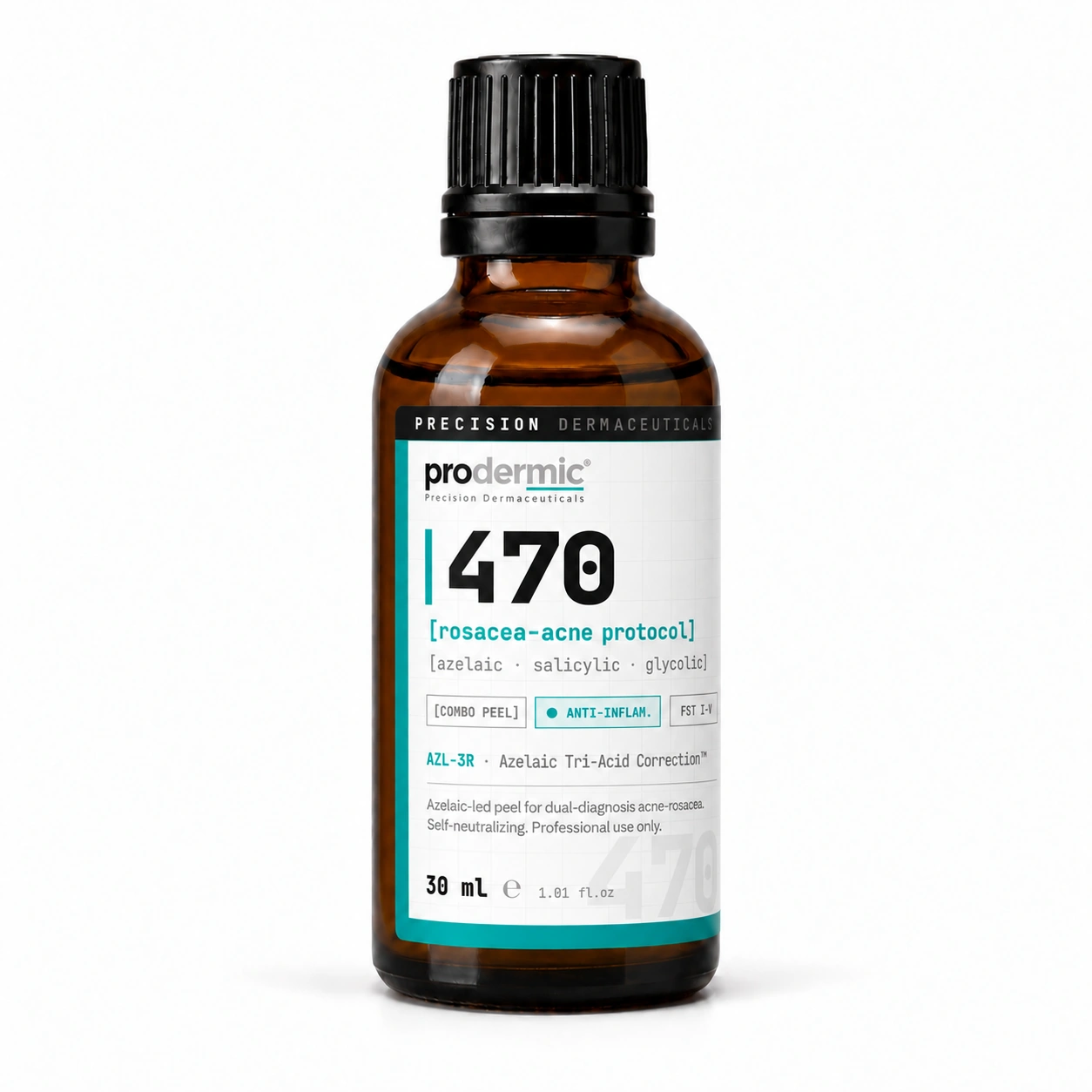
- Combination Therapy: Utilize combinations cautiously to maximize efficacy while minimizing adverse effects. The Rosacea-Acne protocol (470), azelaic acid 20% with salicylic and glycolic acid, is one such combination.
Advanced Protocols
-
Laser Utilization: Consider integrating fractional nonablative technology, which offers reduced downtime and targeted deep skin tissue remodeling, aiding both pigment and textural improvement.
-
Adapted Techniques: For practitioners working with skin of color, the Depigment Protocol (555) can address both inflammatory and pigmentary sequelae.
Incorporating topical polyphenols and flavonoids post-laser can expedite recovery and potentially enhance results by modulating inflammation.
Frequently asked questions
What makes PIH more prominent in darker skin?
Darker skin has more active melanocytes, which respond intensely to inflammation, leading to marked PIH. Management: Anti-inflammatory agents like niacinamide and antioxidants such as vitamin C can mitigate this.
Additional Insights: Incorporating calming botanicals such as chamomile and kukui can modulate inflammatory pathways at the skin surface level.
Are chemical peels safe for skin of color?
Yes, but only under skilled hands to prevent PIH. Key Practice: Pre-treatment with tyrosinase inhibitors (e.g., kojic acid) can reduce melanogenic activity. The Acne Protocol (460, Jessner's) suits appropriately primed candidates.
Optimization: Layer chemical peels carefully under dermatological guidance with precise timing for optimal safety and efficacy.
What are safer alternatives to hydroquinone?
Azelaic acid and mequinol are recommended for their efficacy and reduced risk of side effects in darker skin. Additional Options: Tranexamic acid and licorice extract can be integrated for synergistic effects.
Application Nuance: Tailor down the concentration and combine with buffering agents to reduce potential irritation. Incorporate herbal depigmenting agents to amplify outcomes and minimize irritation.
Can retinoids irritate darker skin tones?
Newer formulations, such as encapsulated or time-release retinoids, are designed to minimize irritation, making them suitable for skin of color. Advice: Gradual introduction and adjunctive moisturizers help improve tolerance.
Further Advice: Consider cyclic dosing strategies and monitor for erythema or peeling, adjusting frequency accordingly.
How do lasers fit into treatment plans?
Lasers, particularly nonablative fractional types, can effectively reduce scarring with careful application. Protocol: Pre-treatment with whitening agents can be considered to minimize post-inflammatory hyperpigmentation.
Post-care Considerations: Implement antioxidant serums and healing balms immediately post-procedure to support rapid recovery and enhance treatment outcomes.
For more detailed protocols, see Salicylic, Glycolic, Lactic, or Mandelic: Choosing the Right Peel.
<Callout>Consider consulting with a dermatological expert for personalized treatment plans based on comprehensive skin assessments.</Callout>
By combining these strategies, practitioners can effectively address the concurrent issues of acne, pigmentation, and texture changes, promoting healthier skin outcomes in adult patients with skin of color.
References
- Effects of Topical Retinoids on Acne and Post-inflammatory Hyperpigmentation in Patients with Skin of Color: A Clinical Review
- Postinflammatory Hyperpigmentation - StatPearls - NCBI Bookshelf
- Nonablative Fractional Laser Resurfacing for Acne Scarring in Patients With Fitzpatrick Skin Phototypes IV-VI - PubMed
Related Protocols
~24 sessions
~24 sessions
~75 sessions
~75 sessions