Yellow Peel (Retinoic Acid) for Melasma in Skin of Color: A Clinician's Protocol
Retinoic acid (yellow) peel for melasma in Fitzpatrick IV–VI: concentrations, cadence, priming and PIH-safe endpoints for the clinician.

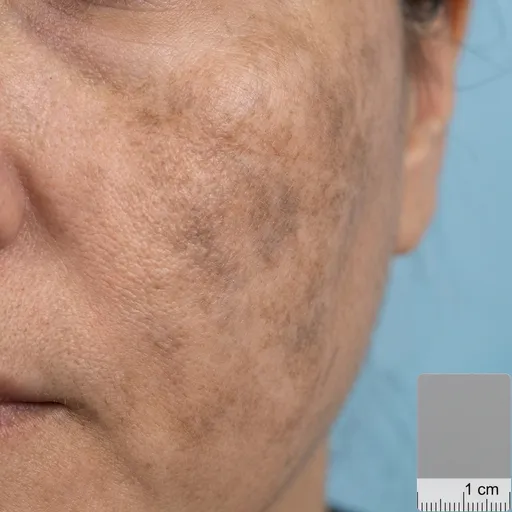
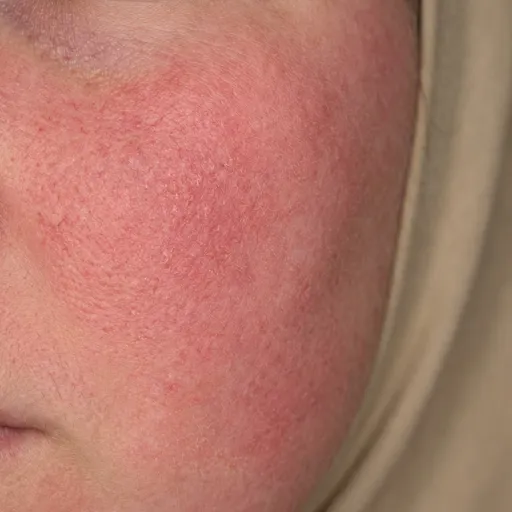
Melasma is one of the few conditions where the treatment can create the disease it is meant to erase. In Fitzpatrick IV–VI skin, an over-aggressive peel does not just fail — it seeds post-inflammatory hyperpigmentation (PIH) that is often darker and more stubborn than the original melasma. That risk profile is exactly why the retinoic acid yellow peel has held its ground in Indian and South-East Asian practice: it works largely through biological remodelling rather than brute-force keratolysis, so the inflammatory cost of each session stays low. This guide covers how to select, prime, apply, and sequence a yellow peel in pigmented skin — and, just as importantly, when not to reach for it.
What a "yellow peel" actually is
"Yellow peel" is a clinical shorthand for a peel whose active is retinoic acid (tretinoin), usually formulated at 5–10%, sometimes combined with other depigmenting agents such as phytic or kojic acid. The name comes from the visible yellow film the retinoid leaves on the skin — not from a frost in the coagulative sense. This is a critical distinction for anyone trained on acid peels: with a glycolic or TCA peel you are watching for erythema or a protein frost as your endpoint. With a retinoic acid peel there is no true frost to chase. The active is left on the skin for hours (typically 4–8) and washed off by the patient at home, so the "endpoint" is a time-and-tolerance decision made at application, not a real-time visual on the treatment couch.
Mechanistically, retinoic acid does not ablate the epidermis. It normalises keratinocyte turnover, disperses melanin already deposited in the epidermis, and — over repeated exposure — modulates melanogenesis and dermal remodelling. Because the pigment-clearing effect is downstream of a biological signal rather than a chemical burn, the peel is comparatively forgiving of dark skin provided the patient has been primed. It is the priming, not the peel, that separates a clean result from a PIH complication.
The evidence in pigmented skin
The reason this peel earns a place in a skin-of-color practice is that its efficacy is genuinely comparable to the workhorse glycolic peel, at a lower inflammatory cost. In a landmark split-face study in dark-skinned patients published in Dermatologic Surgery, a serial 1% tretinoin peel and a 70% glycolic acid peel produced statistically similar reductions in modified MASI, with no significant difference between the two sides of the face — but the tretinoin side was better tolerated. For FST IV–VI, "as effective, better tolerated" is the whole argument.
More recent randomised data refines the picture. A 2024 double-blind RCT in the Journal of Cosmetic Dermatology compared retinoic acid peels across formulations over four fortnightly sessions and found that formulation, not just the presence of retinoic acid, drove the result — an optimised microemulsion retinoic acid peel roughly doubled the MASI reduction of a conventional retinoic acid peel, and both clearly beat placebo.
The practical read for a skin-of-color clinician: retinoic acid is not a weaker cousin of glycolic — it is a comparably effective active with a gentler inflammatory footprint, and the quality of the vehicle matters as much as the percentage on the label. Higher retinoic acid concentration is not automatically better; a well-formulated 5% will often outperform a crude 10%.
Candidate selection by Fitzpatrick type
Melasma is not one disease and skin is not one colour. The yellow peel earns its keep in the mid-to-deep Fitzpatrick range, but the priming burden and cadence must shift as you go darker. Use the table as a starting frame, then adjust to the individual's irritation history.
| Fitzpatrick | Priming (weeks) | Starting concentration | Cadence | PIH watch |
|---|---|---|---|---|
| III | 2 | 5–10% | Every 2 weeks | Low |
| IV | 3–4 | 5% | Every 3 weeks | Moderate |
| V | 4+ | 5% (short contact) | Every 3–4 weeks | High |
| VI | 4–6 | 5% (short contact, spot-test first) | Every 4 weeks | Very high — consider gentler alternatives first |
For FST VI in particular, do not default to a peel because the patient asks for one. A topical multi-pathway regimen or a very superficial mandelic/lactic approach often reaches the same place with less risk. When you do peel FST V–VI, a short-contact retinoic acid protocol (shorter leave-on time, washed off earlier) lets you titrate exposure upward across sessions instead of gambling the first application.
Priming: the step that decides the result
Priming is where a yellow peel is won or lost. Two to six weeks before the first peel, start the patient on a nightly regimen that both tests their skin's tolerance and pre-conditions melanocytes so the procedure lands on calm, predictable tissue. A standard prime pairs a low-strength retinoid with a tyrosinase-directed depigmenting agent, plus non-negotiable daily photoprotection.
The multi-pathway melasma protocol explains why hitting several steps of the melanogenesis pathway at once outperforms any single agent — priming is that logic applied before the procedure rather than after. A patient who cannot tolerate two weeks of a priming retinoid at home is telling you, cheaply and safely, that they will not tolerate a peel; better to learn that from a mild retinoid reaction than from a facial PIH complication.
For the priming and maintenance layer, a leave-on depigmenting serum bridges the gap between in-clinic sessions and keeps the pathway suppressed between peels. Photoprotection is not adjunctive here — it is part of the mechanism. UV and visible light are direct melanogenic stimuli, and an unprotected melasma patient will out-produce anything your peel clears.
Application protocol
- Confirm priming and consentVerify 2–6 weeks of tolerated priming, no active inflammation, and photoprotection compliance. Re-confirm the patient understands this is a leave-on, home-washed peel.
- Degrease and prepCleanse and gently degrease. Protect the lip margins, alae, and canthi where product can pool and over-concentrate.
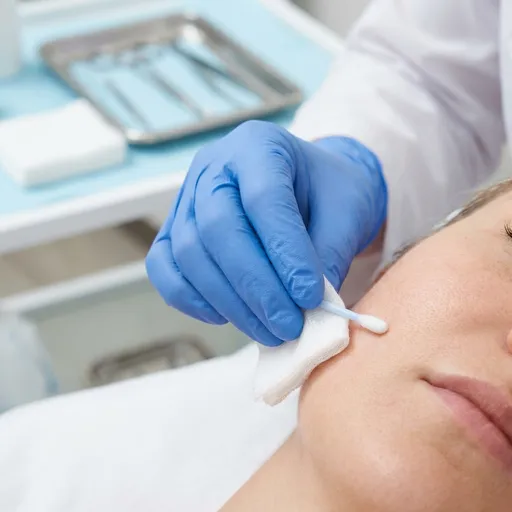
- Apply retinoic acid layerApply an even coat of the retinoic acid peel. There is no frost endpoint — application is uniform coverage, not a reaction to chase. Note the yellow film as your visual confirmation of coverage.
- Set the clock, not the frostInstruct the patient on exact leave-on time (typically 4–8 hours; shorter for FST V–VI first sessions) and the wash-off procedure. Give a written aftercare card.
- Aftercare and follow-upBland emollient, strict sun avoidance, no actives until the visible peeling resolves (usually 3–7 days). Review at 2–4 weeks before the next session.
Peeling — fine, dry desquamation — typically begins 2–3 days after wash-off and resolves within a week. Counsel patients firmly not to pick; mechanical trauma to peeling FST IV–VI skin is another PIH trigger. Detailed post-procedure pigment management is covered in our guide to managing post-peel PIH in Indian skin.
Where the yellow peel sits among your options
A yellow peel is one instrument in a melasma programme, not the programme itself. It pairs naturally with a glutathione-based brightening approach for maintenance, and it competes — on price and predictability — with proprietary depigmenting systems. Our comparison of Cosmelan vs Dermamelan vs chemical peels lays out where a clinician-controlled peel series wins on cost-per-outcome, and where a branded system's structure is worth the premium. For patients who need a systemic lever alongside the topical and procedural work, tranexamic acid is the evidence-backed adjunct to layer in.
The strategic point for a skin-of-color practice: sequence, don't stack. Prime topically, peel conservatively, maintain with a depigmenting serum and glutathione, and photoprotect relentlessly. The glutathione peel protocol and a broad-spectrum procedural sunscreen are the two ends of that maintenance bracket that keep a cleared face cleared.
Frequently asked questions
Is a yellow peel safe for Fitzpatrick V and VI skin?
Yes, with disciplined priming and a short-contact protocol — but it is not automatically the first choice. Because retinoic acid works through biological remodelling rather than a chemical burn, its inflammatory cost is lower than a comparable glycolic or TCA peel, which is why it is favoured in dark skin. The safety, however, comes from 4–6 weeks of priming, conservative concentrations, and shorter leave-on times on the first session, not from the active alone. For some FST VI patients a topical-only or very superficial mandelic approach is safer.
How is a yellow peel different from a glycolic or TCA peel?
A glycolic or TCA peel is an acid keratolytic with a real-time visual endpoint (erythema or protein frost) that the clinician controls on the couch. A yellow peel uses retinoic acid, is left on for several hours, and is washed off by the patient at home — there is no frost to chase. It clears pigment by normalising cell turnover and modulating melanogenesis rather than by ablating the epidermis.
How many yellow peel sessions does melasma need?
Most protocols run a series of four to six sessions spaced two to four weeks apart, with the interval widening in darker skin. Trial data showing meaningful MASI reduction is typically based on four fortnightly sessions. Melasma is chronic and relapsing, so sessions must be followed by an ongoing maintenance regimen — priming-style topicals and strict photoprotection — to hold the result.
Does a higher retinoic acid concentration work better?
Not reliably. A double-blind comparison found no significant added benefit from a 10% versus a 5% retinoic acid peel, and RCT data suggests the quality of the formulation (for example a microemulsion vehicle) drives the result more than the raw percentage. Starting at 5% in FST IV–VI is both safer and, on the evidence, no less effective.
What is the biggest cause of a yellow peel going wrong in brown skin?
Under-priming and over-exposure. Peeling inflamed or unprimed skin, or a patient leaving the product on longer than instructed, are the common paths to post-inflammatory hyperpigmentation — the very outcome the patient wanted to avoid. Robust priming, written contact-time instructions, and relentless photoprotection prevent nearly all of it.
<KeyTakeaways> 1. A yellow peel is a leave-on retinoic acid peel with no frost endpoint — the clinician sets concentration and contact time; the patient washes it off at home. 2. In dark skin it is as effective as 70% glycolic acid and better tolerated (split-face Dermatologic Surgery data), because it remodels rather than burns. 3. Formulation beats percentage: an optimised retinoic acid peel doubled the MASI reduction of a conventional one, and 5% matched 10% — start low. 4. Priming decides the outcome. 2–6 weeks of a priming retinoid plus a depigmenting agent, scaled by Fitzpatrick type, is non-negotiable. 5. For FST V–VI, use short-contact protocols and consider gentler alternatives first; never peel over active inflammation. 6. Sequence within a full programme — prime, peel, maintain with a depigmenting serum and glutathione, and photoprotect relentlessly. </KeyTakeaways>
References
- Khunger N, et al. Tretinoin Peels versus Glycolic Acid Peels in the Treatment of Melasma in Dark-Skinned Patients. Dermatologic Surgery, 2004.
- Andrade JFM, et al. Peeling with retinoic acid in microemulsion for treatment of melasma: a double-blind randomized controlled clinical study. J Cosmet Dermatol, 2024.
- Comparative study of trichloroacetic acid versus glycolic acid chemical peels in the treatment of melasma. Indian Journal of Dermatology, Venereology and Leprology (IJDVL).
- Melasma. DermNet NZ.
Related Protocols
~16 sessions
~24 sessions
~24 sessions
~30 sessions