


Tranexamic Acid for Melasma: Oral, Topical and Microneedling-Assisted Routes Compared
Explore tranexamic acid's efficacy for melasma via oral, topical, and microneedling-assisted delivery.

Melasma, a common hyperpigmentation disorder, poses significant treatment challenges due to its persistent nature and complex etiology. Tranexamic acid (TXA), a synthetic derivative of lysine, offers a promising therapeutic option, available in oral, topical, and microneedling-assisted forms. Understanding the efficacy, application, and comparative benefits of each route is key to optimizing patient outcomes.
Understanding Melasma and Tranexamic Acid
Melasma manifests as brown or gray-brown patches, predominantly affecting sun-exposed areas such as the face, forearms, and neck. The condition’s multifaceted pathogenesis includes hormonal influences like pregnancy and contraceptive pills, UV exposure, genetic predisposition, and certain medications. Traditional treatments often fall short due to the chronic nature of melasma and the skin’s reactive behavioral pattern.
Tranexamic acid provides a multi-pathway approach. It functions by blocking plasminogen activation, thereby reducing the melanocyte stimulation and subsequent pigment production. This is crucial in the UV-induced damage cycle, making TXA particularly useful in melasma management.
Mechanism at a Cellular Level
On a cellular level, TXA interferes with the interaction between keratinocytes and melanocytes. By inhibiting the plasminogen-plasmin conversion, it curtails the release of inflammatory mediators that typically exacerbate melanin production. This makes it a pivotal addition to the melasma treatment protocol.
Oral Tranexamic Acid
Efficacy and Mechanism
Oral TXA has demonstrated substantial effectiveness in treating melasma, with studies highlighting its ability to substantially fade pigmentation.
It is theorized to normalize epidermal turnover and melanogenesis. A randomized trial involving 60 women revealed comparable improvements in melasma severity between patients receiving oral TXA and those undergoing microneedling.
Oral administration works systemically, potentially inhibiting the hormonal pathway of melasma development. The downregulation of plasmin-induced inflammatory factors directly impacts the hyperactive melanocytes, thereby reducing pigment formation.
Protocol and Administration
The standard oral regimen involves a 250 mg dose administered twice daily, typically over a 12-week span. While generally well-tolerated, practitioners should exercise caution due to rare adverse events such as thromboembolic occurrences, making it imperative to evaluate patient history before initiation.
Patient Selection and Safety
Oral TXA is particularly suited for individuals with widespread melasma or those unresponsive to topical therapies. Close monitoring is advised for individuals with a history of clotting disorders. It is crucial to ensure patients are informed about potential risks and the necessity for adherence to the regimen.
Topical Tranexamic Acid
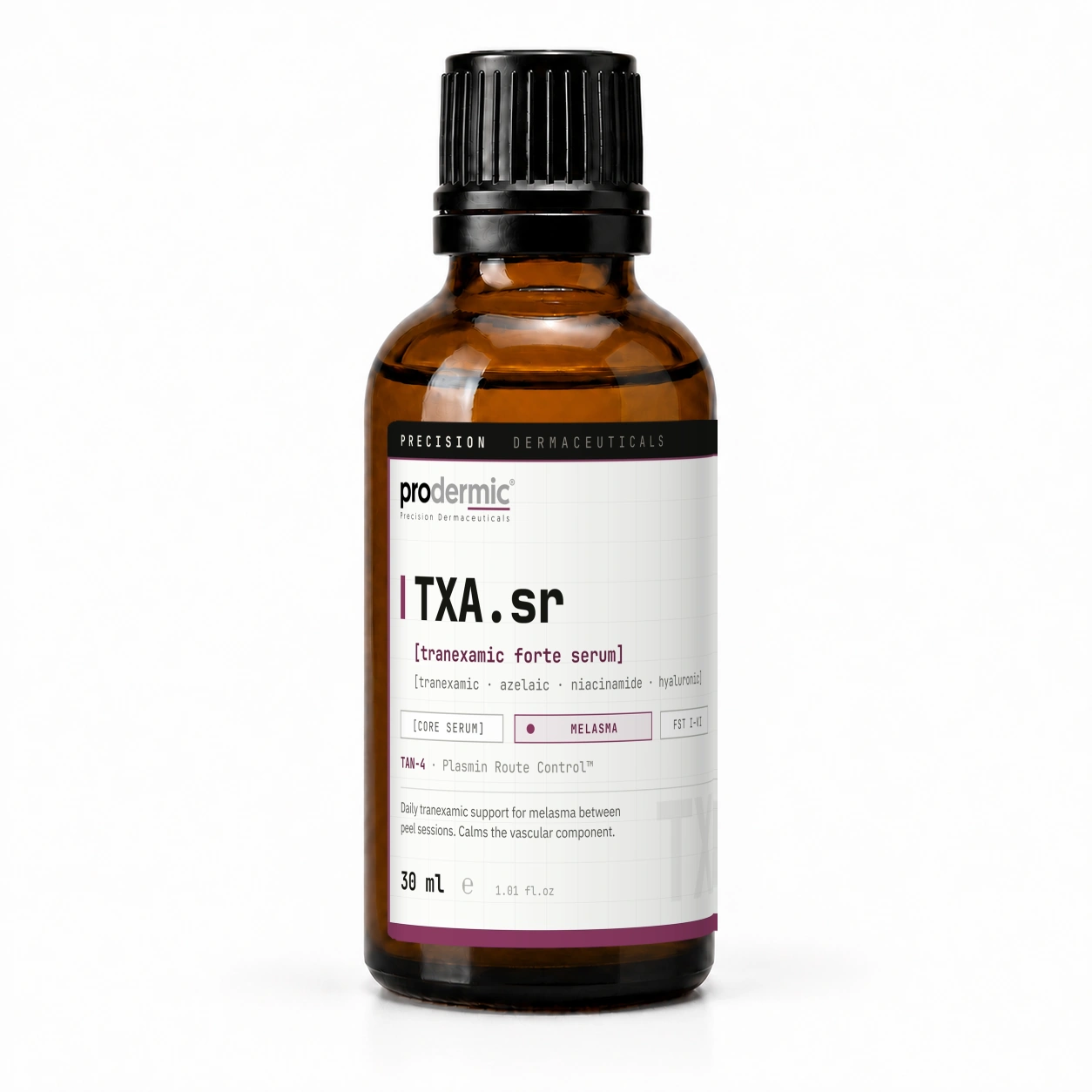
Topical formulations of TXA are designed to deliver the active ingredient directly to the affected areas of the skin. This route is usually employed for localized melasma patches and can be synergistically combined with other topical agents for enhanced outcomes. Consider using alongside the Melasmonil Peel.
Formulation and Application Techniques
Typical topical formulations include creams and gels containing 2-5% TXA. The choice of vehicle is crucial; a hydrophilic base enhances penetration, while a gel form offers better patient acceptability due to minimal residue. Topical TXA requires consistent application twice daily to maintain therapeutic levels in the skin.
Combination with Microneedling
Topical TXA, when partnered with microneedling, showcases enhanced efficacy. Microneedling aids in breaking down the stratum corneum, thereby improving the penetration and absorption of topical TXA.
A study demonstrated a substantial 65.92% improvement in the melasma area and severity index on the TXA-treated side, compared to only 20.75% on the non-treated side.
Procedure protocols often specify the use of a 10% TXA solution applied immediately post-microneedling to capitalize on opened microchannels, optimizing dermal absorption.
Safety in Sensitive Skin
While irritation is minimal, caution is advised in patients with extremely sensitive skin or those of Fitzpatrick IV-VI, where microneedling may induce post-inflammatory hyperpigmentation (PIH). Ensuring a comprehensive skin assessment before the procedure is critical. This also ties into understanding patient demographics and specific skin requirements, which are integral to successful treatment outcomes.
Microneedling-Assisted Delivery
Advantages and Mechanism
Microneedling facilitates deeper penetration of therapeutic agents, including TXA. This method is particularly advantageous for those presenting with recalcitrant or dermal-type melasma. A meta-analysis of 12 studies involving 459 patients reflected superior improvement in melasma when combined with microneedling.
Microneedling not only enhances the topical penetration but also independently stimulates a healing response, promoting collagen production and skin turnover, crucial in reducing the hyperpigmented appearance.
Technique and Procedure
Treatments involve the use of professional-grade dermal rollers or pens, with needle depths ranging from 0.5 to 1.5 mm. The specific depth is chosen based on the melasma type and skin thickness. Each session involves multiple passes, ensuring comprehensive coverage and maximal channel creation.
These techniques require careful consideration of patient skin type and existing dermal conditions to avoid PIH, especially in darker skin tones. Utilizing pre-treatment protocols such as hydroquinone or a gentle chemical peel can precondition the skin efficiently.
Protocol
Performed at 2-week intervals over eight weeks, microneedling allows for rapid regeneration and pigmentation reduction. This approach reduces the risk of systemic side effects as compared to oral administration.
Comparative Efficacy
Critical analysis suggests all forms of TXA show benefits in melasma treatment, with microneedling-assisted delivery often emerging as the most effective. Studies indicate peak outcomes around the 12-week mark, signaling the potency of combined approaches.
While all treatment paths display efficacy, choice depends upon patient preference, lesion distribution, and history of responsiveness to prior treatments. A nuanced selection process maximizes therapeutic success.
Selection Criteria
Choosing the appropriate TXA form involves assessing the extent of the melasma and individual patient needs:
- Oral TXA: Best for widespread or recalcitrant cases.
- Topical TXA with Microneedling: Optimal for localized and epidermal melasma.
- Standalone Topical TXA: Ideal for patients with contraindications to oral medication.
Frequently asked questions
How does TXA work on a cellular level?
Tranexamic acid inhibits the conversion of plasminogen to plasmin, curbing melanocyte activation and melanin production, thereby addressing hyperpigmentation effectively.
TxA's reduction of local inflammatory mediators interrupts the feedback loop perpetuating pigment production, emphasizing its use in treating dermal involvement melasma.
Are there side effects specific to darker skin tones?
TXA is generally well-received across skin types, including Fitzpatrick IV-VI. However, close observation for mild irritation and strict adherence to procedural technique during microneedling is advised.
Its appeal in skin of color comes from the reduced reliance solely on hydroquinone, diminishing the risk of exogenous ochronosis.
How long before results are apparent?
Noticeable improvements usually occur within 8-12 weeks, particularly with microneedling-assisted topical application. Accurate technique and patient compliance are pivotal to successful outcomes.
The lingering effects post-treatment emphasize the importance of patient education for maintenance routines.
Is oral TXA safe for prolonged use?
Oral TXA is typically safe but necessitates monitoring for infrequent risks, like thromboembolic events. Long-term usage should occur under medical oversight.
Practitioners must ensure comprehensive patient histories concerning clotting disorders to mitigate risk.
Can TXA be used with other treatments?
Indeed, TXA can be integrated with chemical peels or lasers, enhancing results in stubborn cases. For those treating skin of color, TXA offers a broadening of the therapeutic strategy. Consider adjunctive treatments such as Cosmelan Forte for an all-encompassing approach.
By effectively bridging the gap between oral and topical care, TXA presents a versatile option across various skin types, tailoring treatment to both individual patient needs and broader clinical objectives.
What are the contraindications of TXA?
Patients with a history of thromboembolic disorders should avoid oral TXA due to the potential risk of adverse events. Additionally, caution is warranted when treating pregnant or breastfeeding women. Thorough evaluation and consistent follow-up are crucial to ensure safe application.
The role of TXA in multi-modal therapy emphasizes its adaptability, significantly advancing the scope of individualized melasma care. Understanding the breadth of TXA's applicability allows clinicians to implement more effective strategies, reduce recurrence rates, and ultimately achieve more satisfying patient outcomes.
References
- Clinical Efficacy of Topical Tranexamic Acid With Microneedling in Melasma
- Comparative Efficacy and Safety of Tranexamic Acid for Melasma by Different Administration Methods: A Systematic Review and Network Meta-Analysis
- Microneedling as an Adjuvant to Topical Therapies for Melasma: A Systematic Review and Meta-Analysis
Related Protocols
~75 sessions
~24 sessions

~16 sessions