


Hydroquinone: Indications, Cycling and Ochronosis Risk
A clinician framework for hydroquinone indications, monitoring, cycling and ochronosis risk in Fitzpatrick IV–VI pigmentation care.

Hydroquinone is neither a pigment cure nor a treatment that must be avoided categorically. It is a potent topical tool for selected epidermal hyperpigmentation, and its safety depends on diagnosis, concentration, duration, application pattern, photoprotection and follow-up. In Fitzpatrick IV–VI skin, the central problem is not simply whether hydroquinone lightens pigment. It is whether the regimen controls melanogenesis without creating dermatitis, treatment-driven post-inflammatory hyperpigmentation (PIH), mottled hypopigmentation or prolonged unsupervised exposure.
For Indian dermatology practice, that distinction matters. Melasma is chronic and relapse-prone; acne-related PIH requires control of the acne that generated it; and blue-grey dermal pigment will not respond like epidermal brown pigment. A finite active phase followed by documented reassessment is therefore more defensible than an indefinite repeat prescription. “Cycling” should describe that clinical decision process—not a rigid calendar applied to every patient.
Where hydroquinone fits—and where it does not
Hydroquinone reduces new melanin formation through reversible tyrosinase inhibition and effects on melanocytes and melanosomes. DermNet notes that it acts on epidermal rather than dermal pigmentation. That boundary is clinically useful: an apparently “resistant” case may reflect incorrect depth assessment, continuing inflammation, poor photoprotection, mixed pathology or non-adherence rather than a need for a stronger concentration.
Reasonable indications include epidermal melasma, acne-associated PIH, selected lentigines and other localized epidermal hypermelanoses after the diagnosis has been established. In PIH, the first intervention remains control of the inflammatory driver. Prescribing a depigmenting agent while inflammatory acne, eczema, friction or an irritant routine continues is a common way to exchange one source of pigment for another. The broader PIH treatment algorithm for skin of color explains that sequence in more detail.
Hydroquinone is a poor response to diagnostic uncertainty. It should not be used to “test” whether an undifferentiated facial pigment disorder is melasma, nor as a general complexion-lightening product. Reconsider the diagnosis when pigment is blue-grey, reticulate, texturally altered, asymmetric in an unexpected pattern, or worsening despite escalating use. Lichen planus pigmentosus, erythema dyschromicum perstans, drug pigmentation, contact melanosis and exogenous ochronosis do not become safer to manage because the hydroquinone concentration is increased.
| Clinical situation | Potential role for hydroquinone | Reason to pause, investigate or choose another route |
|---|---|---|
| Epidermal melasma with a stable barrier | Time-limited first-line topical within a broader plan | Dermal or mixed pigment, active dermatitis, poor follow-up or unrealistic “permanent clearance” expectations |
| Acne-related epidermal PIH | Adjunct after inflammatory acne is controlled | Ongoing picking, new inflammatory lesions or irritant acne therapy that is still generating PIH |
| Localized epidermal lentigines | Targeted use after diagnostic confirmation | Atypical, changing or clinically uncertain lesion requiring dermoscopic or histologic assessment |
| Pre-procedure pigment-risk management | Selected clinician-directed priming plan | Irritated barrier, recent unreported bleaching products or inability to follow photoprotection |
| Diffuse “brightening” request | No routine indication | High risk of over-application, uneven exposure and indefinite unsupervised use |
Why Fitzpatrick IV–VI requires tighter inflammation control
Hydroquinone does not uniquely create PIH, but any regimen that provokes dermatitis can amplify pigment in reactive melanocytes. The skin-of-color literature consistently emphasizes that irritation from a treatment can worsen the condition being treated. That makes burning, persistent itch, scale, erythema, weeping or new darkening clinically relevant adverse signals—not proof that the product is “working.” Erythema may also be less conspicuous in deeper phototypes; warmth, tenderness, oedema, grey-brown change and new sensitivity can be more informative than redness alone.
Review the entire routine, not only the prescription. Retinoids, benzoyl peroxide, exfoliating acids, scrubs, fragranced products, waxing and in-clinic procedures can create cumulative irritancy. DermNet specifically cautions against concurrent benzoyl peroxide with hydroquinone. A patient using several actives on alternate nights may still have near-continuous barrier stress.
Photoprotection is equally foundational. Ultraviolet exposure sustains melanogenesis, while visible light is relevant in melasma and deeper phototypes. Indian commuting, window exposure, outdoor work, heat and difficulty with reapplication should be discussed as practical variables. The procedural rationale for broad-spectrum and visible-light-aware protection is covered in sunscreen as a pigment-treatment adjunct. Escalating hydroquinone while daily light exposure remains uncontrolled makes efficacy and tolerability harder to interpret.
A reassessment-based hydroquinone cycle
There is no single cycling schedule validated for every diagnosis, formulation and phototype. Published recommendations do, however, support finite review points. DermNet advises stopping if there is no benefit after three months. An evidence-graded Indian melasma review recommends 4% hydroquinone and sets a maximum recommended duration of 16 weeks, while acknowledging that study designs and adverse-event reporting are imperfect. Indian pigment experts also recommend rotating maintenance toward non-hydroquinone agents rather than leaving patients on unsupervised continuous therapy.
The following framework translates those sources into a clinic workflow. It is a monitoring scaffold, not a universal prescription.
| Phase | Clinician objective | Continue only if | Exit or change course when |
|---|---|---|---|
| Baseline | Confirm diagnosis and depth; inventory previous exposure; photograph; assess barrier and pregnancy/lactation status | The target is an appropriate epidermal hypermelanosis and follow-up is feasible | Diagnosis is uncertain, barrier is inflamed, prior exposure is prolonged or ochronosis is suspected |
| Tolerance introduction | Establish that the selected formulation and frequency do not provoke dermatitis | Application is accurate and skin remains clinically quiet | Persistent burning, scale, itch, weeping, oedema or new hyperpigmentation develops |
| Active treatment | Seek measurable change over an explicitly finite course | Standardized review shows benefit without meaningful adverse effects | No objective benefit by the planned review, pigment worsens or adherence/exposure cannot be verified |
| Reassessment | Decide whether to stop, reduce frequency, rotate or investigate | Diagnosis still fits and the benefit-risk balance remains favourable | The patient is self-escalating, using multiple unrecorded creams or showing blue-grey/textural change |
| Maintenance | Control triggers and recurrence with photoprotection and lower-irritancy non-HQ options; reserve intermittent HQ for selected supervised cases | Long-term plan is tolerated and reviewed | Recurrence prompts automatic concentration escalation rather than diagnostic review |

This separation is particularly valuable in melasma. Melasma frequently returns because light, heat, hormonal factors and vascular or inflammatory signals persist; recurrence does not necessarily mean the prior hydroquinone course was inadequate. The melasma maintenance framework treats relapse prevention as a long-term plan rather than continuous escalation.
Ochronosis: understand the signal, not just the warning
Exogenous ochronosis is an acquired blue-black or grey-blue dermal pigmentation associated with chronic exposure to certain topical agents, most notably hydroquinone. It can resemble worsening melasma early, which creates a dangerous feedback loop: the patient sees more pigment and applies more product.
The best summary of the published hydroquinone-associated cases is a 2022 International Journal of Dermatology systematic review. It included 126 patients reported across 56 articles. Most cases involved long exposure; the median duration was five years, and only four cases followed courses of three months or less. Concentrations above 4% and unreported concentrations were frequent among the cases. These data identify patterns in published case reports; they do not provide an incidence rate, and they cannot prove that every short supervised course is risk-free.
The skin-of-color signal is nonetheless important. More than half of the reported patients were Fitzpatrick V–VI. Two Indian Fitzpatrick IV cases published in the Indian Journal of Dermatology, Venereology and Leprology had used 2% hydroquinone-containing lightening regimens without supervision for eight and 13 years. Their presentation illustrates why concentration alone is not a sufficient safeguard: cumulative duration, sun exposure, application behaviour, combination products and follow-up all matter.
What should trigger dermoscopy or biopsy consideration?
The IJDVL report describes coarse or speckled grey-brown to blue-black pigmentation, pinpoint papules, textural change and telangiectasia as warning features. Dermoscopically, ochronosis may show dark amorphous perifollicular structures, follicular opening obliteration and curvilinear or “worm-like” patterns, whereas melasma more often preserves a finer pigment network. Dermoscopy is a screening aid; biopsy remains the diagnostic reference when confirmation is needed.
If ochronosis is suspected, stop the suspected causative exposure and reassess the diagnosis and full product history. Do not simply substitute another aggressive peel into an inflamed or diagnostically uncertain field. Treatment outcomes for established ochronosis are often unsatisfactory, which is why early recognition and prevention matter more than promising reversal.
| Finding | More consistent with | Immediate clinical implication |
|---|---|---|
| Burning, erythema, scale or itch soon after introduction | Irritant or allergic contact dermatitis | Hold the suspected irritant, restore the barrier and review formulation/excipients before rechallenge |
| New brown PIH following visible inflammation | Treatment-driven PIH | Control inflammation and simplify the regimen; do not intensify exfoliation |
| Gradual blue-grey, reticulate or speckled darkening with years of exposure | Exogenous ochronosis until excluded | Stop hydroquinone, perform dermoscopy and consider biopsy |
| No change after a documented finite course | Wrong depth, wrong diagnosis, inadequate exposure control or non-response | Reassess rather than increase concentration automatically |
Building the non-hydroquinone interval
A hydroquinone-free interval should not become a period of therapeutic neglect. It should control the underlying disease, protect the barrier and maintain pigment stability with agents matched to the diagnosis. The evidence is uneven across alternatives, and “natural” does not mean non-irritating.
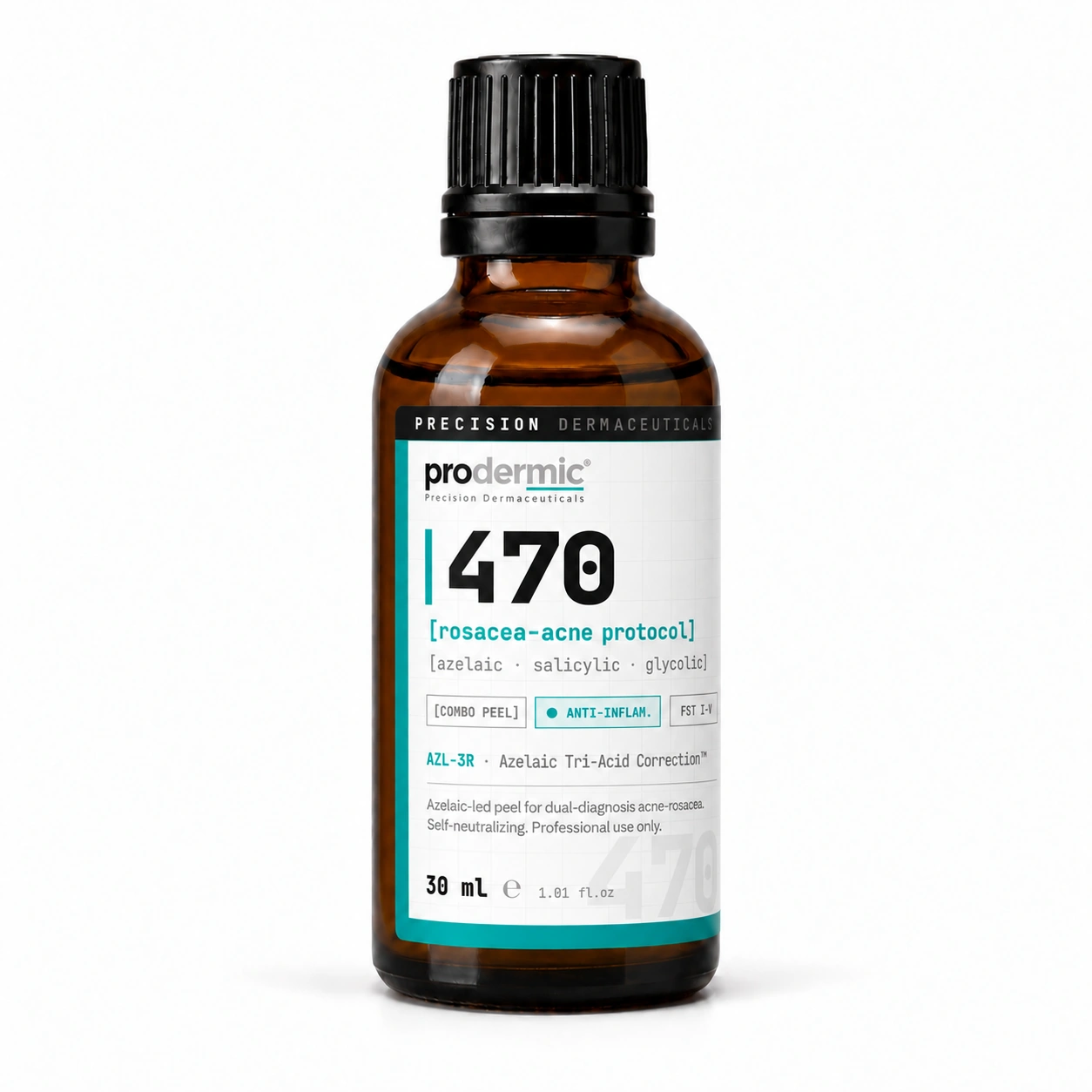
- Azelaic acid combines pigment-modulating and anti-inflammatory activity, making it useful when acne and PIH coexist. A 2023 meta-analysis of six randomized melasma trials found azelaic acid at least competitive with hydroquinone on several outcomes, although formulation, concentration and study quality varied. For the acne-plus-PIH phenotype, an in-clinic 470 Azeliac Acnil protocol may be considered only after active barrier inflammation is controlled; its azelaic, salicylic and glycolic acid combination is a professional peel, not a drop-in replacement for a topical maintenance cream.
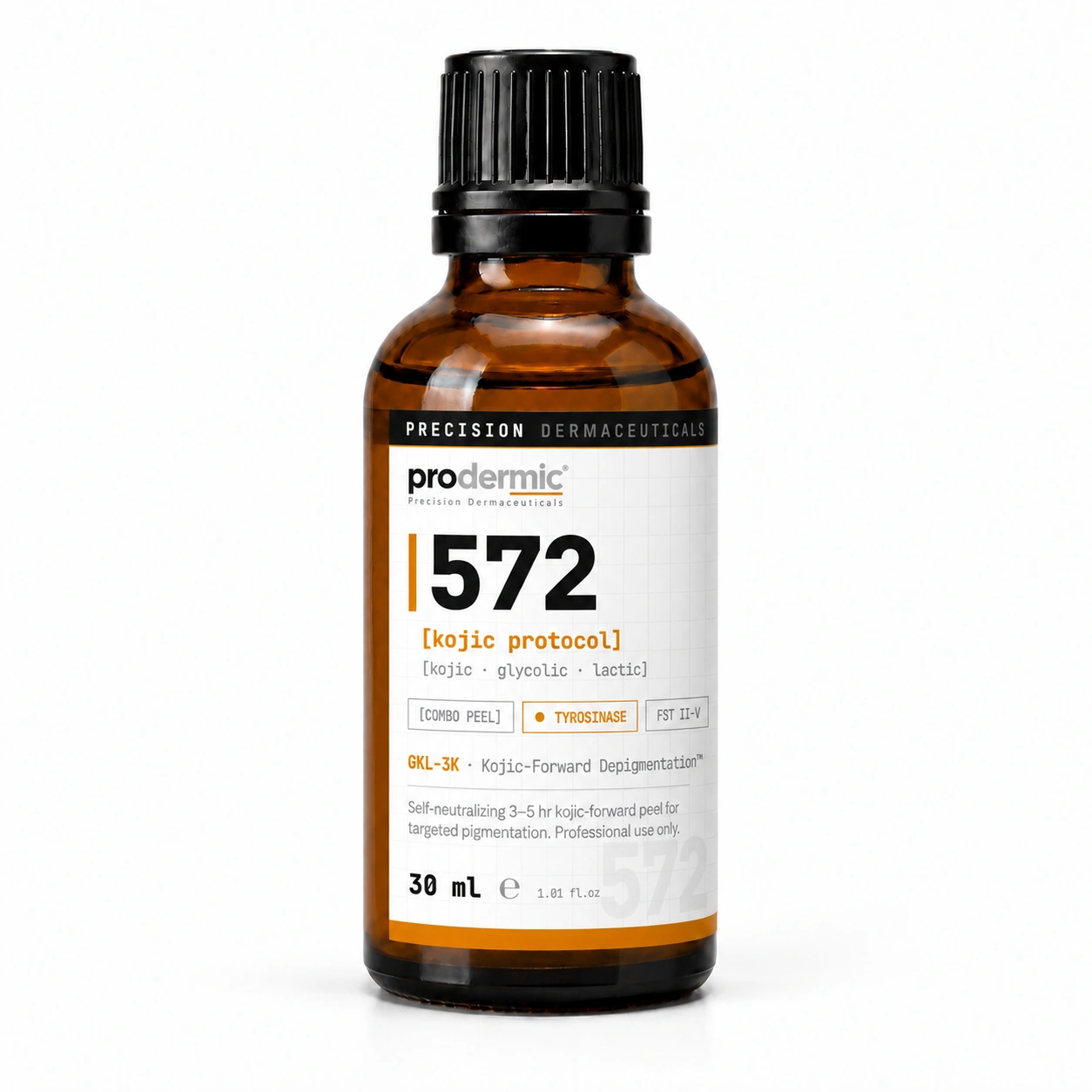
- Kojic acid and arbutin inhibit melanogenesis through mechanisms distinct from a standard hydroquinone course and are common components of maintenance regimens. Contact dermatitis remains possible. 572 Kojic Forte combines kojic acid with glycolic and lactic acids for clinician-controlled PIH and tone protocols, so total acid exposure and phototype—not the word “kojic”—should determine candidacy.
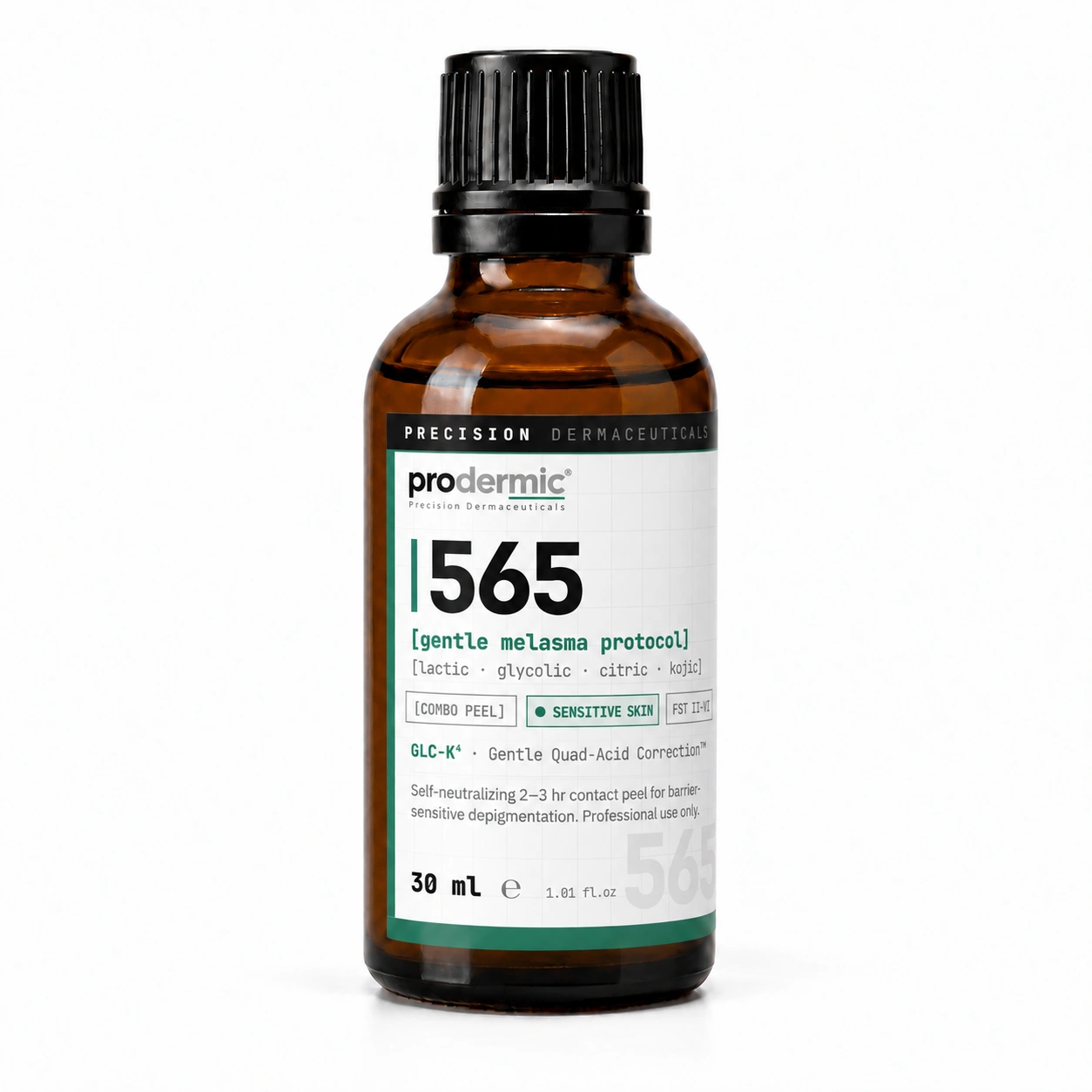
- Gentler multi-acid selection may be appropriate when a procedure is genuinely indicated after the barrier is quiet. 565 Melasmonil Peel uses lower-concentration glycolic, lactic, citric and kojic acids than more aggressive pigment protocols, but it still produces a controlled chemical injury and should not be applied over hydroquinone dermatitis or suspected ochronosis.
- Cysteamine has randomized-trial and meta-analytic support as a melasma option, with recent evidence finding no clear efficacy difference versus 4% hydroquinone across pooled trials. Odour, contact time, tolerability, availability and patient adherence influence real-world use.
- Tranexamic acid may be used topically or, in selected melasma patients, systemically. Oral use requires a medical thrombotic-risk assessment and should never be positioned as a routine cosmetic substitute. Route-specific evidence and screening are discussed in tranexamic acid for melasma.
The larger depigmenting-agent comparison can help structure the rotation, while the skin-barrier assessment before procedures helps decide when no peel should be performed. Product selection should follow diagnosis and barrier readiness; it should never be used to justify stacking multiple pigment suppressors and acids in the same irritated patient.
Documentation that makes cycling safer
At each review, record the product and concentration actually used, frequency, application area, other lightening creams, steroid exposure, new procedures, adverse symptoms and cumulative duration. Compare standardized photographs taken under similar lighting rather than relying on memory. Ask the patient to bring every tube or share label photographs; “a fairness cream” or “a pharmacy mix” is not a sufficient exposure history.
Set an explicit next decision in the note: continue to the defined endpoint, stop for lack of response, pause for dermatitis, transition to maintenance, or investigate possible ochronosis. This prevents a repeat prescription from becoming indefinite by administrative inertia. It also makes counseling more credible: the patient understands that maintenance photoprotection and trigger control are part of treatment, not evidence that the active course failed.
Key Takeaways
- Use hydroquinone for a confirmed epidermal pigment indication, not as a diagnostic trial or indefinite complexion-lightening agent.
- In Fitzpatrick IV–VI skin, dermatitis control, standardized follow-up and photoprotection are part of the prescription because treatment inflammation can generate new PIH.
- Build a finite active phase with an explicit reassessment point; “cycling” is a decision framework, not a universally validated calendar.
- Exogenous ochronosis is most strongly associated in the published cases with prolonged, often unsupervised exposure; blue-grey or reticulate worsening warrants dermoscopy and possible biopsy rather than escalation.
- Use the hydroquinone-free interval to control triggers and select evidence-based maintenance options, reserving peels for a calm barrier and a clear procedural indication.
Frequently asked questions
Is hydroquinone unsafe for all Fitzpatrick IV–VI patients?
No. Hydroquinone can be effective for selected epidermal hyperpigmentation in deeper phototypes. The risk-benefit calculation becomes less favourable with diagnostic uncertainty, active dermatitis, poor follow-up, escalating concentrations or prolonged unsupervised use. Darker phototype is a reason for tighter monitoring and inflammation control, not an automatic prohibition.
How long should a hydroquinone course last?
There is no universal duration for every patient and formulation. DermNet recommends reassessment and stopping if no benefit is seen after three months; an Indian evidence-based melasma review recommends a maximum of 16 weeks for 4% hydroquinone. Follow the approved local product information, diagnosis-specific evidence and individual response rather than treating either number as a standing prescription.
Does cycling hydroquinone prevent ochronosis?
No trial proves that a particular on-off calendar eliminates ochronosis. A finite course with planned reassessment reduces the chance of unnoticed indefinite exposure and creates opportunities to detect dermatitis, non-response or blue-grey change. That is a risk-management rationale, not a guarantee.
Can a chemical peel be performed during a hydroquinone-free interval?
Only if the diagnosis, indication and barrier assessment support it. A “break” from hydroquinone does not make irritated skin procedure-ready. Active dermatitis, recent worsening pigment or suspected ochronosis should trigger deferral and evaluation, not substitution with an acid peel.
What is the earliest clue that worsening melasma may actually be ochronosis?
Suspect ochronosis when pigment becomes blue-grey, coarse, speckled or reticulate—especially after years of lightening-product exposure—or when dermoscopy shows perifollicular dark structures that distort follicular openings. Stop the suspected exposure and evaluate; do not advise the patient to apply more hydroquinone to the darker areas.
References
- Exogenous ochronosis associated with hydroquinone: a systematic review
- Dermoscopic criteria for differentiating exogenous ochronosis from melasma
- Medical management of melasma: consensus recommendations by the Indian Pigmentary Expert Group
- Evidence-based review and suggested treatment recommendations for melasma
- Postinflammatory hyperpigmentation in skin of color
- Azelaic acid versus hydroquinone for melasma: systematic review and meta-analysis
- Cysteamine 5% for melasma: systematic review and meta-analysis of randomized trials
- Hydroquinone — DermNet
Related Protocols
~24 sessions
~24 sessions
~24 sessions