


Mandelic Acid Peels for Fitzpatrick IV-VI: The Safer-First-Peel Argument
Explore why mandelic acid is a safe first peel for Fitzpatrick IV-VI skin types, minimizing PIH risks.

Mandelic acid peels have emerged as a pivotal option for patients with Fitzpatrick IV-VI skin types due to their gentler profile, reducing the risk of post-inflammatory hyperpigmentation (PIH). This makes them a preferred candidate for dermatologists initiating chemical peels in individuals with darker skin.
Understanding Mandelic Acid
Mandelic acid, an alpha-hydroxy acid (AHA) derived from bitter almonds, is gaining traction in the world of chemical peels for its unique properties. Its larger molecular size (152 Da) facilitates slower skin penetration, delivering a more controlled and uniform exfoliation process ideal for Fitzpatrick IV-VI skin types. This characteristic not only minimizes irritation but also balances efficacy and safety, especially critical for sensitive and reactive skin.
Mechanism of Action
Mandelic acid works by disrupting the bonds between corneocytes, promoting exfoliation and accelerating cell turnover. This action makes it effective in treating acne, hyperpigmentation, and other skin concerns while minimizing irritation and the risk of PIH. The gentle exfoliation improves skin texture and tone without the harshness associated with stronger acids like glycolic acid.
Mandelic acid also possesses antibacterial properties, particularly beneficial for acne-prone skin. This added advantage sets it apart from other AHAs, offering a comprehensive approach to skincare by not only exfoliating but also preventing bacterial proliferation—a common cause of acne.
Pharmacodynamics
The pharmacodynamics of mandelic acid revolve around its attributes as a gentle exfoliant. Unlike smaller molecules such as glycolic acid, mandelic's larger molecular structure ensures a slower, more even penetration through the epidermis. This means that the acid can work its way through the layers of the skin, effectively improving skin turnover without overwhelming it. This is particularly advantageous for darker skin tones, where melanocytes are more active and sensitive to irritation.
Clinical Evidence
Acne and Post-Acne Hyperpigmentation
In a study involving 45 patients, mandelic acid peels utilized over a 12-week period demonstrated significant improvements in both inflammatory and non-inflammatory acne lesions.
The slow penetration ensures minimal side effects like erythema or irritation, which can otherwise exacerbate PIH in darker skin tones.
Clinical trials have also explored the peel’s impact on post-acne marks, with results suggesting substantial improvement in skin texture and tone in patients using mandelic acid as part of a comprehensive acne management regime. This includes its use in combination with other treatments like topical retinoids or antibiotics, highlighting its compatibility with comprehensive acne protocols.
For readers interested in nuanced acne management, consider exploring our comparison of acids for acne patients.
Melasma Treatment
A randomized trial on melasma demonstrated a 60.98% reduction in the Melasma Area and Severity Index (MASI) when using a combined peel with salicylic and mandelic acids. This dual approach enhances each acid’s strengths, targeting melanin synthesis pathways both superficially and at deeper epidermal layers. Melasmonil Peel often incorporates mandelic acid, leveraging this synergy for patients presenting with complex pigmentation disorders.
Comparative Analysis
Glycolic vs. Mandelic Peels
While glycolic acid is effective, its deeper penetration can increase the risk of PIH in patients with Fitzpatrick IV-VI skin types. Conversely, mandelic acid’s slower absorption offers a safer alternative, with steady improvements over a series of treatments. The choice between these peels often depends on patient history and skin reactivity, with mandelic being favored for first-time patients or those with a history of hyperreactivity.
Salicylic Acid Peels
Primarily used for treating oily, acne-prone skin, salicylic acid can result in higher irritation risks. As a result, mandelic acid emerges as a safer option for patients requiring gentle treatments. The antibacterial and comedolytic properties of mandelic acid enhance its appeal, particularly for patients with Fitzpatrick IV-VI skin types who need a nuanced acne treatment strategy that minimizes risk.
For those interested in salicylic-based protocols, explore our salicylic peel procedure.
Safety Protocols
Maximizing safety is paramount when applying mandelic acid peels, particularly in diverse and sensitive skin types.
- Pre-Peel Preparation
Prior to application, patients should engage in sun protection and use a skin-lightening agent like hydroquinone 2% for at least two weeks before the peel to help minimize PIH risk.
- Peel Application
Typically, mandelic acid concentrations of 20–40% are used. The solution should be evenly applied, avoiding excess pressure or prolonged contact. Neutralization with a basic solution, like sodium bicarbonate, should be available in case of over-reaction.
- Post-Peel Care
Encourage gentle skincare, including sunscreen and moisturizers, and schedule follow-ups to monitor the skin’s response. Refrain from using products that may cause irritation, such as retinoids, until the skin has fully recovered.
Attention to environment, patient comfort, and procedural protocols is crucial. Ensuring a calm and communicative atmosphere supports overall treatment success and patient satisfaction.
Advantages of Mandelic Acid Peels
Mandelic acid is ideal for initial treatments across a spectrum of skin concerns in Fitzpatrick IV-VI skin. Dermatologists should incorporate it when developing a chemical-peel service line for diverse skin types. Its inclusion highlights a commitment to personalized care.
The versatility of mandelic acid also extends to combination therapies, often used with microdermabrasion or laser treatments to enhance results with lessened downtime. Its application in melasma multi-pathway protocols underscores its role in comprehensive dermatological care.
Frequently asked questions
What makes mandelic acid peels suitable for darker skin?
The larger molecular size of mandelic acid allows for slower penetration, reducing irritation and the risk of PIH in Fitzpatrick IV-VI skin types. This makes it particularly beneficial for minimizing adverse reactions and unauthorized pigmentation.
Are there specific conditions mandelic acid treats effectively?
Yes, mandelic acid effectively treats acne, melasma, and various hyperpigmentation conditions, particularly in darker skin tones. Its antibacterial action, combined with keratolytic effects, addresses the root causes of these issues while enhancing aesthetic outcomes.
How often should mandelic acid peels be conducted?
Sessions are typically scheduled every 3-4 weeks, contingent on patient response and treatment goals. Frequency should be adjusted based on observed tolerance and ongoing evaluation by the clinician, ensuring tailored treatment planning.
How should patients prepare for a mandelic acid peel?
Preparation involves consistent sunscreen use and possibly a skin-lightening agent to reduce PIH, guided by a dermatologist. This phase ensures adjustments toward ideal treatment outcomes.
Is there a difference in downtime with mandelic acid peels?
Minimal downtime of 3–5 days is observed due to the peel's gentle nature. During this period, skin flaking and dryness may occur, necessitating dedicated adherence to post-care instructions for optimal healing.
Can mandelic acid peels be combined with other treatments?
Yes, they are often combined with therapies like microdermabrasion or lasers, enhancing efficacy while reducing PIH concerns. This makes mandelic acid peels a flexible tool in multi-modal aesthetic strategies.
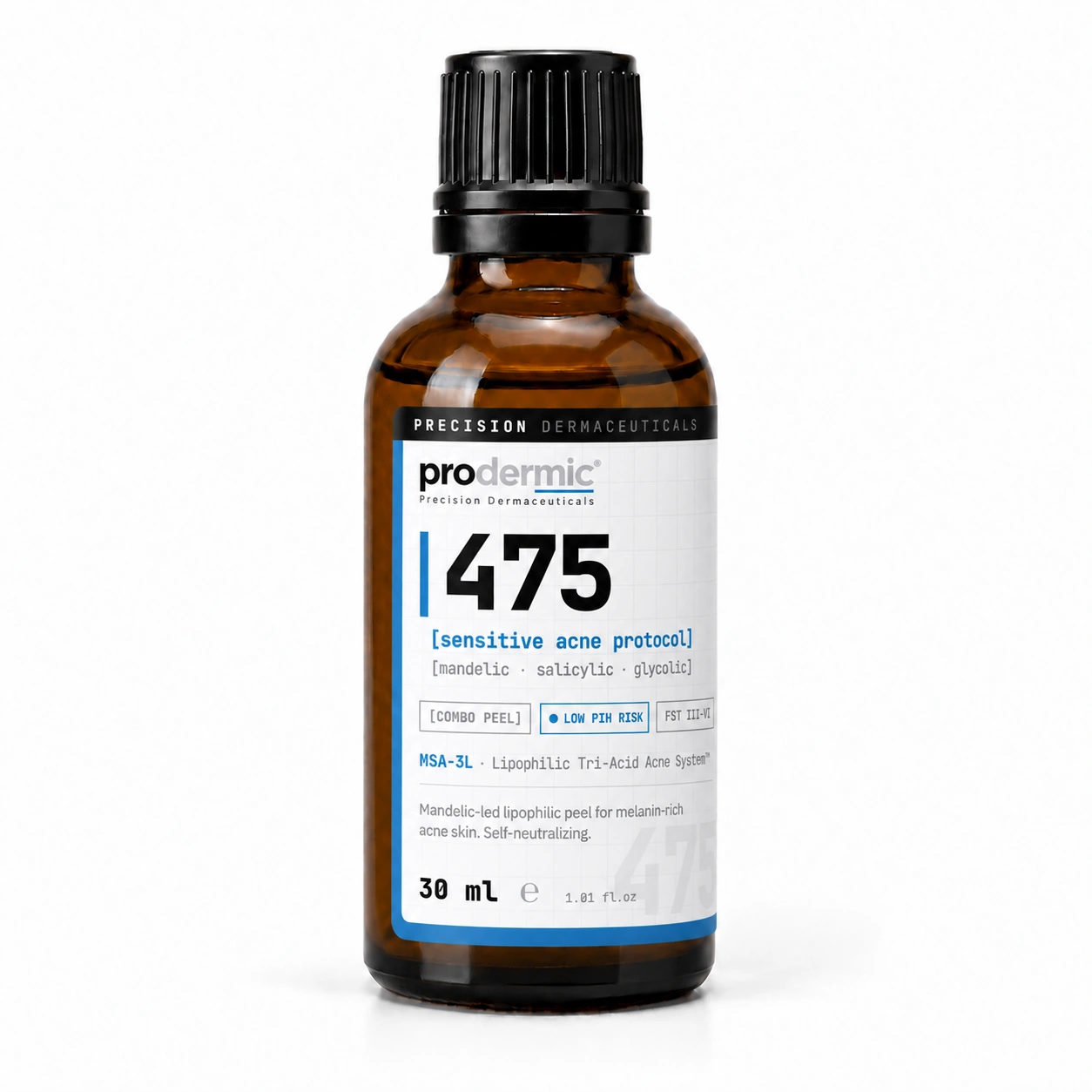
Incorporating peels such as Mandelic Acnil allows dermatologists to offer safe, effective treatment options for patients with darker skin, broadening available treatments and enhancing skincare results. Addressing individual needs within patient-specific frameworks ensures that mandelic peels remain a cornerstone in advanced dermatological care.
References
Related Protocols
~24 sessions
~24 sessions
~24 sessions